The Erlbacher Collection
For generations, the Mississippi River has shaped the identity, economy and growth of Cape Girardeau
Few local families became as closely connected to that river as the Erlbacher family. The Erlbacher Collection at the Kellerman Museum preserves the story of a Southeast Missouri family whose work grew from building and operating riverboats in Cape Girardeau into a substantial marine transportation and repair enterprise on the Mississippi River system. Through historic photographs, company records, artifacts and family stories, the collection documents an important chapter in Cape Girardeau’s history as a working river city.
The story begins with brothers Edwin “Eddie” Erlbacher and Robert Erlbacher, who entered the river business in the early decades of the twentieth century. By the 1930s, the brothers were building riverboats and operating what became known as Erlbacher Brothers Barge Line. Their work helped establish a family enterprise that would remain connected to commercial navigation for generations.
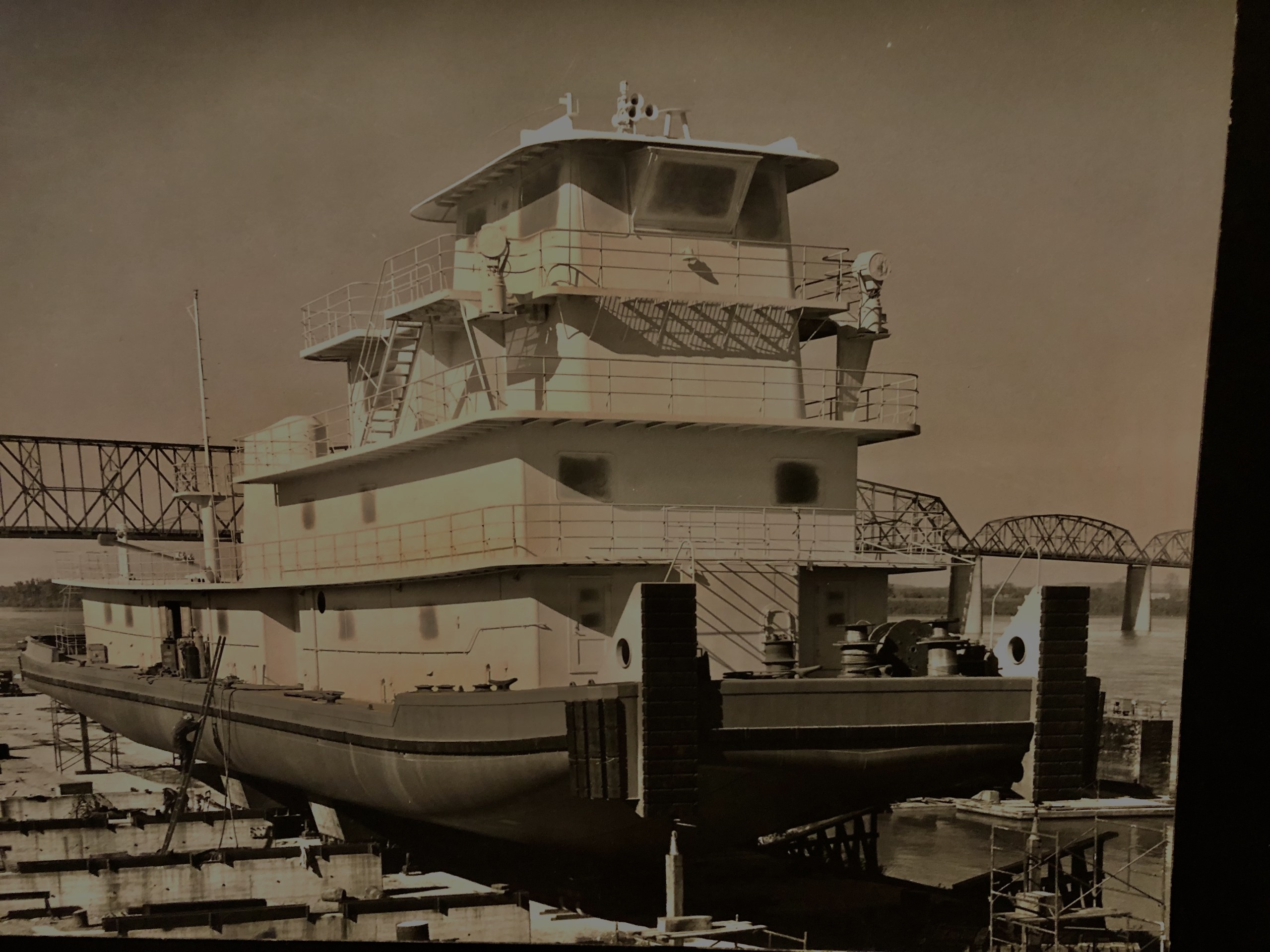
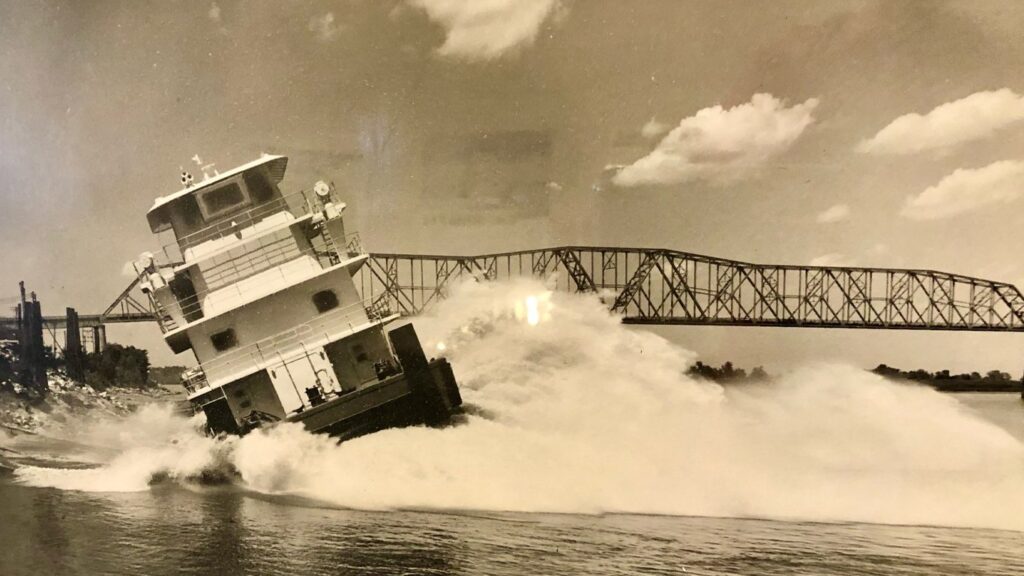
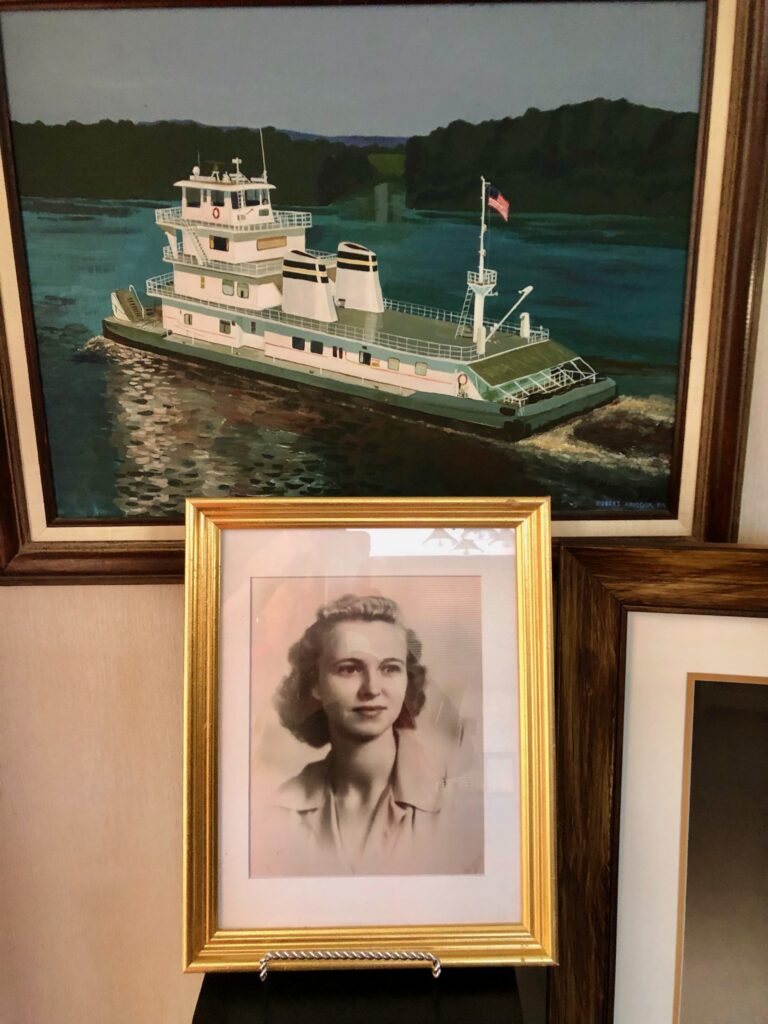
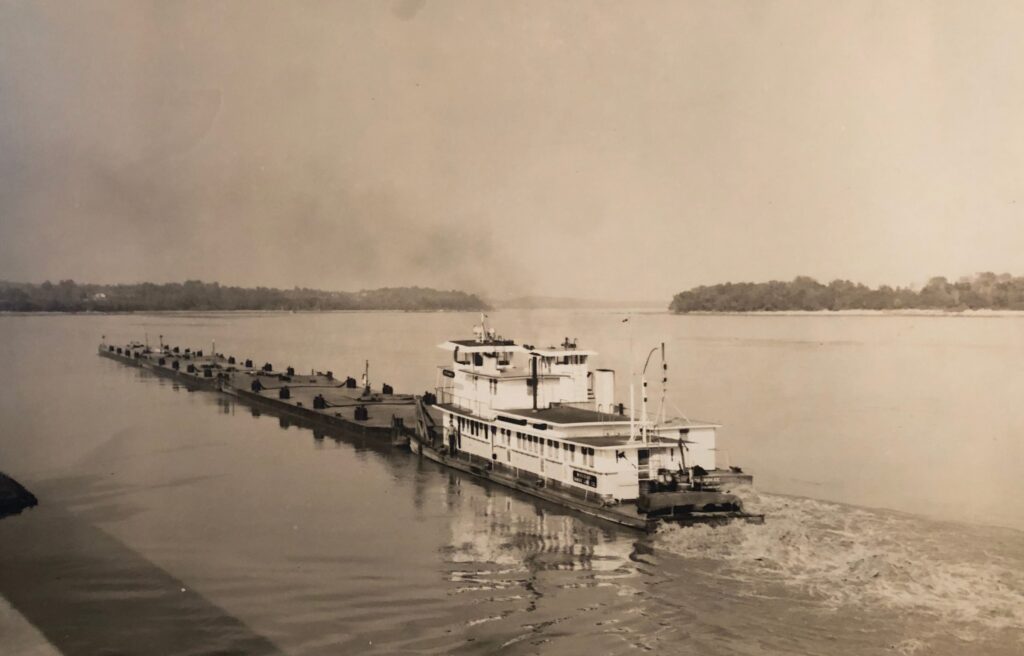
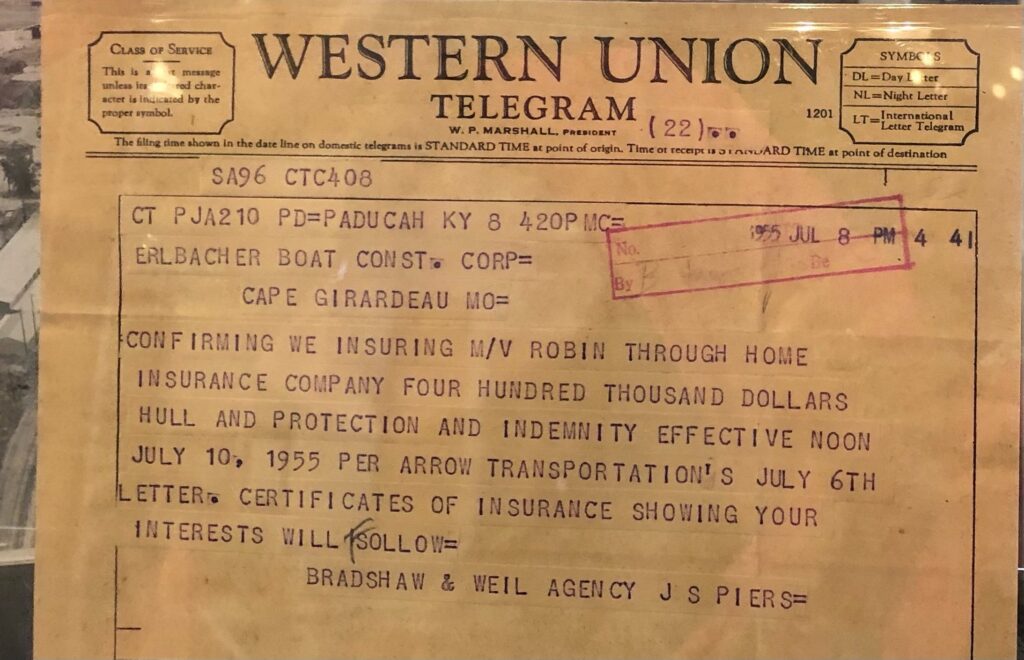
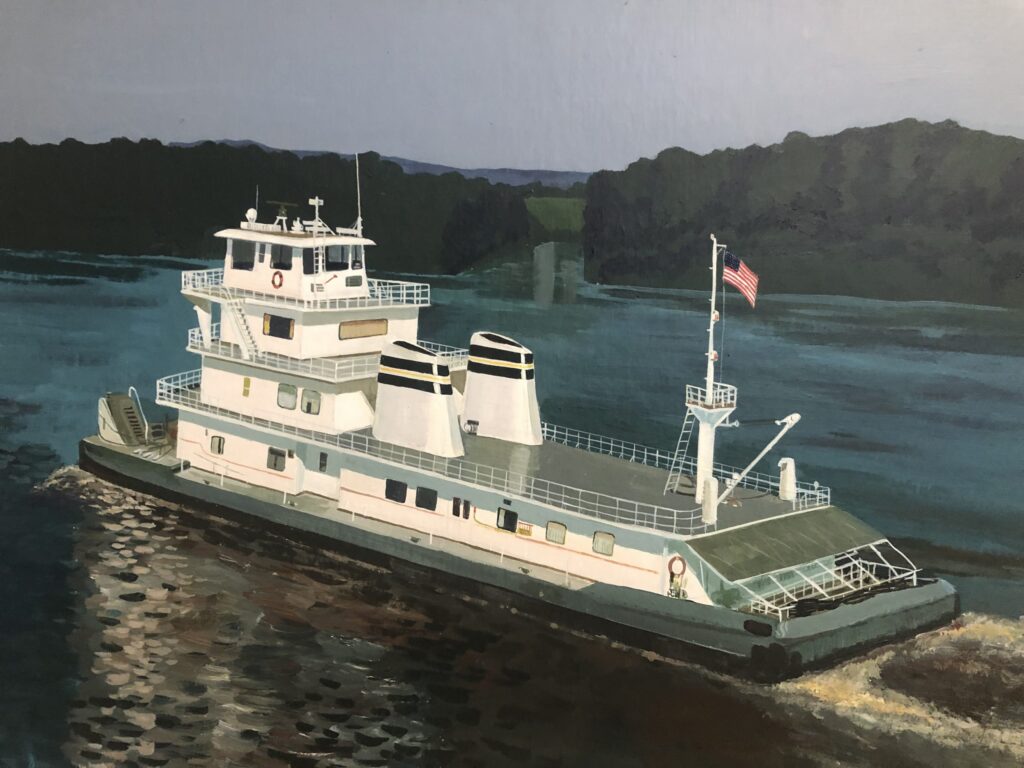
Their accomplishments were not limited to operating boats. The Erlbachers built them in Cape Girardeau. In November 1933, the towboat *John Hall* was launched into the Mississippi River. In 1936 came the Mokita, then the largest watercraft launched in Cape Girardeau. The family’s ambitions continued to grow, culminating in the construction of the 2,000-horsepower towboat *Robin*, launched in 1950.
The Erlbacher Collection tells this larger story of entrepreneurship, ingenuity and life on the Mississippi, and of the generations of men and women whose livelihoods were tied to the river.
Missouri Barge Line
Built in Cape Girardeau, Made for the Mississippi
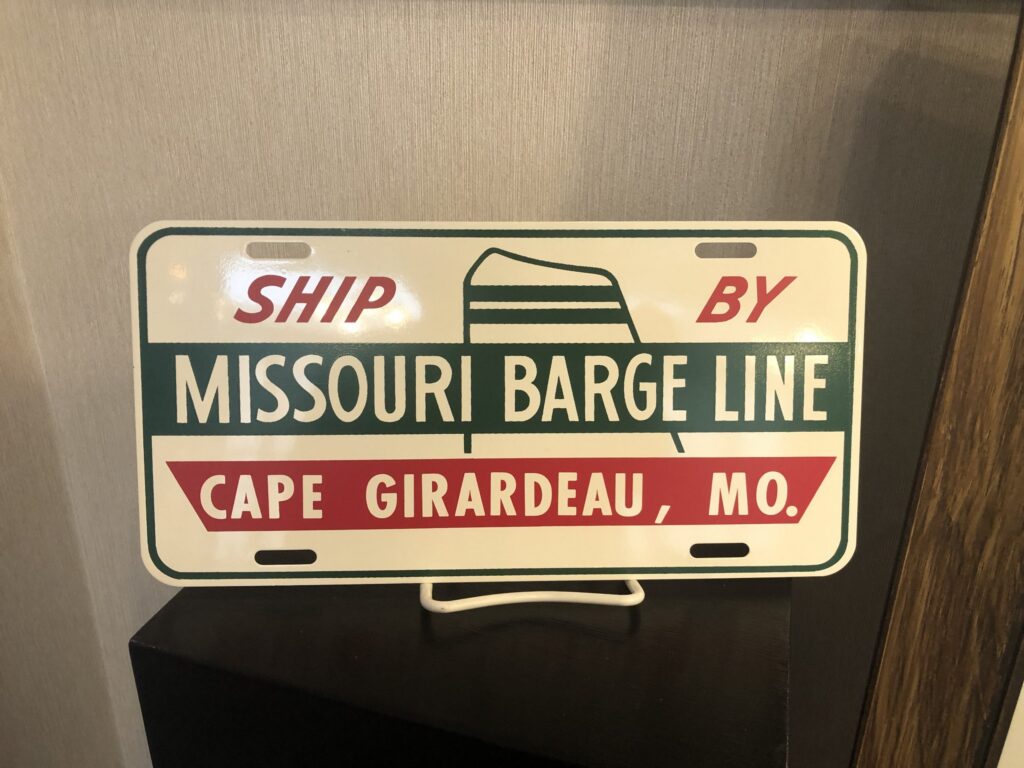
Following World War II, the Erlbacher family’s river operations entered a new era. Robert Erlbacher continued operating the family’s boats and barges under a new name: Missouri Barge Line.
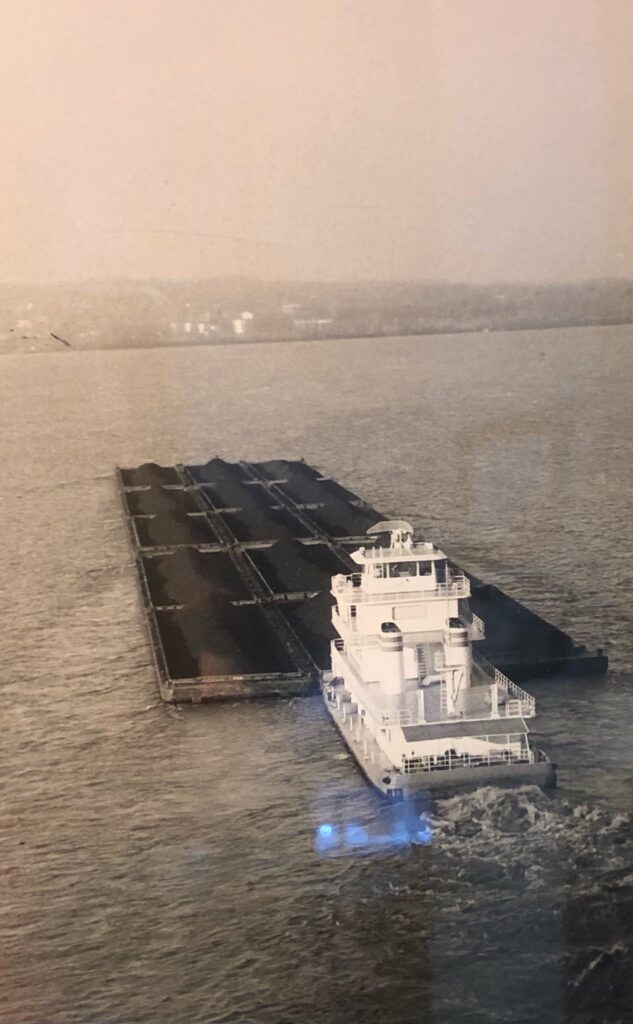
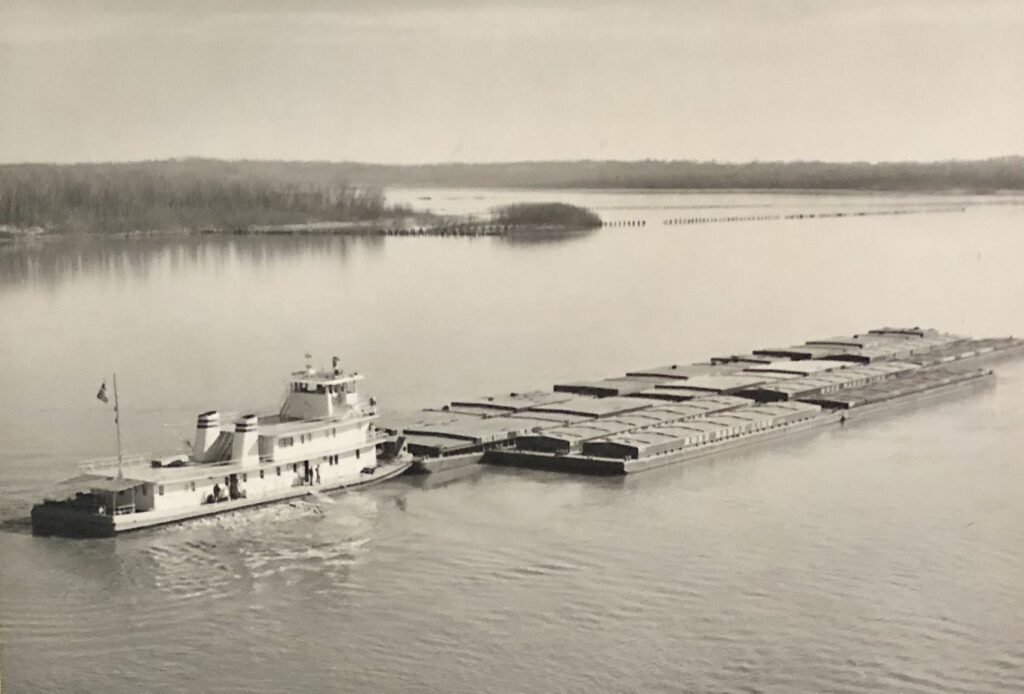
From its base in Cape Girardeau, Missouri Barge Line became part of the vast inland transportation system that moves America’s agricultural products, raw materials and commodities along the Mississippi and its tributaries.
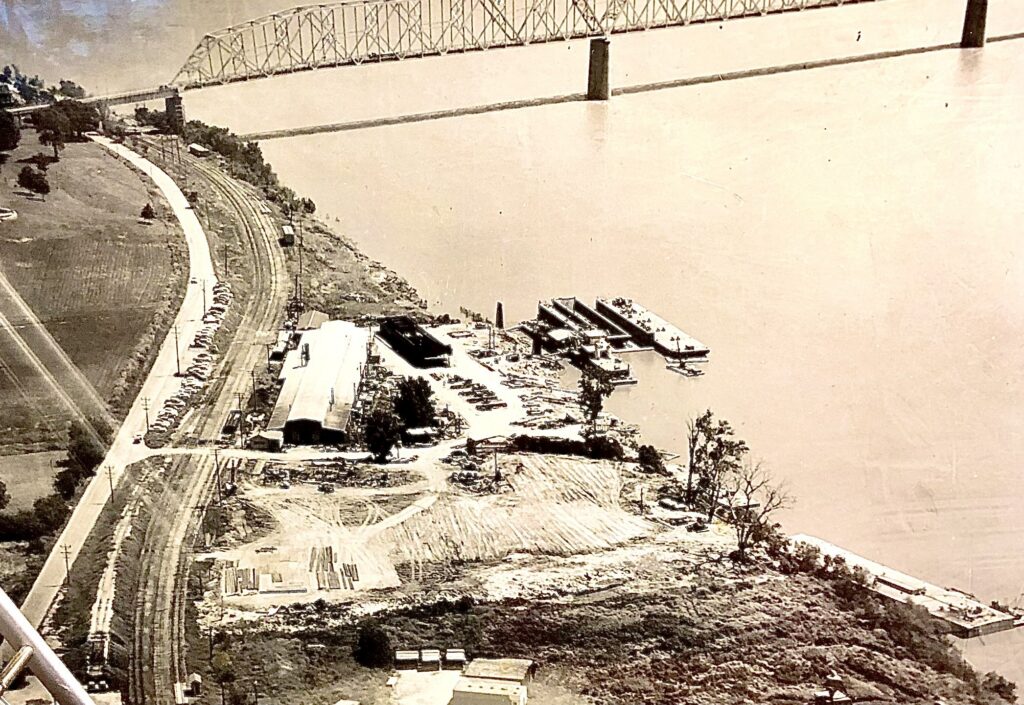
The business also gave rise to another important Cape Girardeau river enterprise. In the early 1950s, Robert Erlbacher established Missouri Dry Dock & Repair Company after finding it difficult to obtain the quality of repair work he wanted for his own vessels. Rather than accept the limitation, he created the capability himself. A second dry dock was added in the early 1960s.
Together, Missouri Barge Line, Missouri Dry Dock & Repair and later Cape Girardeau Fleeting created a locally based network of river transportation, vessel maintenance and marine services.
The companies became employers, supported skilled maritime trades and connected Cape Girardeau directly to commerce moving throughout the Mississippi River system. By the early twenty-first century, federal records documented Erlbacher-operated barges carrying grain and agricultural products across that system.
In 2008, AEP River Operations acquired major assets of Missouri Barge Line and Cape Girardeau Fleeting. The transaction included nine towboats, hopper barges, harbor boats, charters and service agreements covering approximately one million tons of cargo annually. More than 90 vessel and management employees were associated with the acquired operation.
Missouri Dry Dock & Repair remained under Erlbacher ownership, carrying the family’s river tradition forward until the business closed at the end of 2022.
What began with two Cape Girardeau brothers building and operating boats ultimately became a river legacy spanning roughly nine decades.
The Erlbacher Family
Three Generations on the River
A Family Legacy on the River
The Erlbacher family’s roots in Cape Girardeau extend beyond its river companies.
Balthaser and Emma Erlbacher raised their family in Cape Girardeau in the early twentieth century. Their children included Edwin, Alma, Melinda and Robert. It was sons Edwin and Robert who transformed their fascination with boats and the Mississippi into an enduring family enterprise.
By the late 1920s, Edwin was experimenting with boat construction at the family’s business on North Main Street. Edwin and Robert subsequently operated as Erlbacher Brothers, building boats and developing a towing and barge operation during an era when the Mississippi remained one of the nation’s most important commercial arteries.
After World War II, the brothers went separate ways in business and Robert continued the family’s river operations as Missouri Barge Line. His creation of Missouri Dry Dock & Repair expanded the family enterprise from transportation into the specialized work of maintaining and repairing commercial vessels.
The next generation carried the business forward. Robert W. Erlbacher II grew up around the shipyard and river operations, learning the business firsthand. Following his father’s sudden death in 1968, he eventually assumed leadership of the family companies and continued their presence on the Mississippi for decades.
The Erlbacher family’s influence can also be found on land. Two distinctive commercial buildings constructed for the family at 1105 and 1107 Broadway in 1957–1958 survive as examples of Streamline Moderne architecture and were listed on the National Register of Historic Places in 2009.
The family also contributed to the preservation of Cape Girardeau’s history. The Erlbachers were once owners of the historic Glenn House and ultimately deeded the property to the Historical Association of Greater Cape Girardeau so that it could be preserved for future generations.
Taken together, these stories make the Erlbachers more than the founders of a successful river business. Their history reflects Cape Girardeau itself: a community shaped by the Mississippi, built through local entrepreneurship and strengthened by generations willing to preserve what came before them.
The Family in Photographs
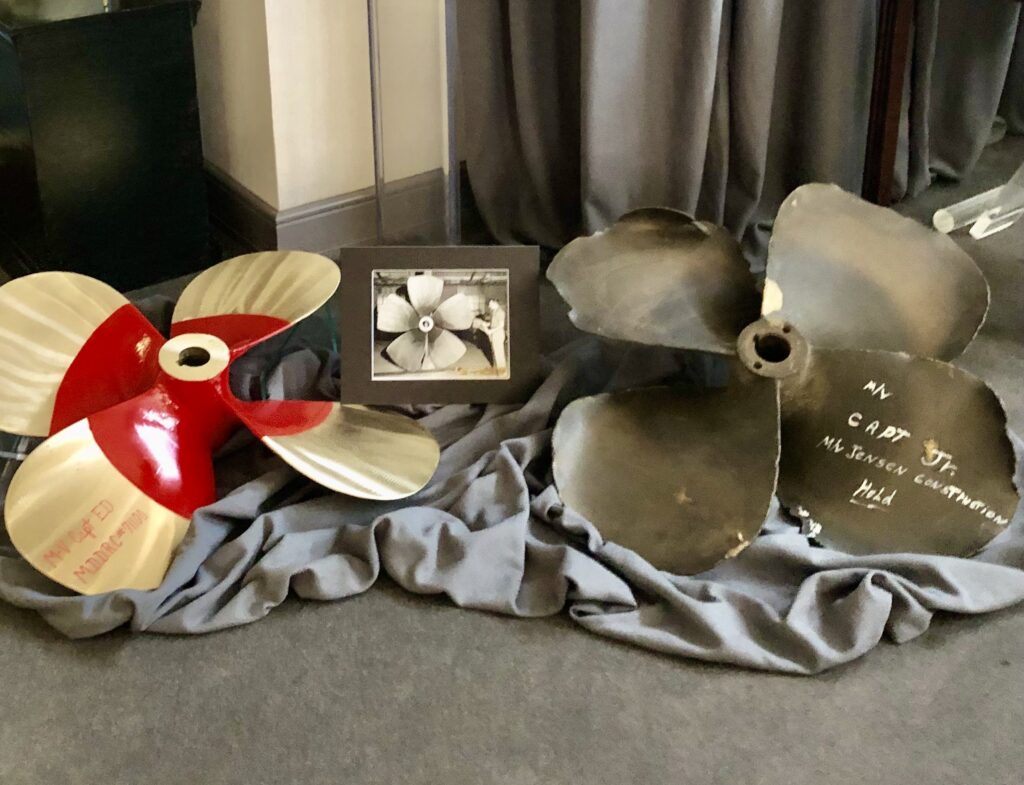
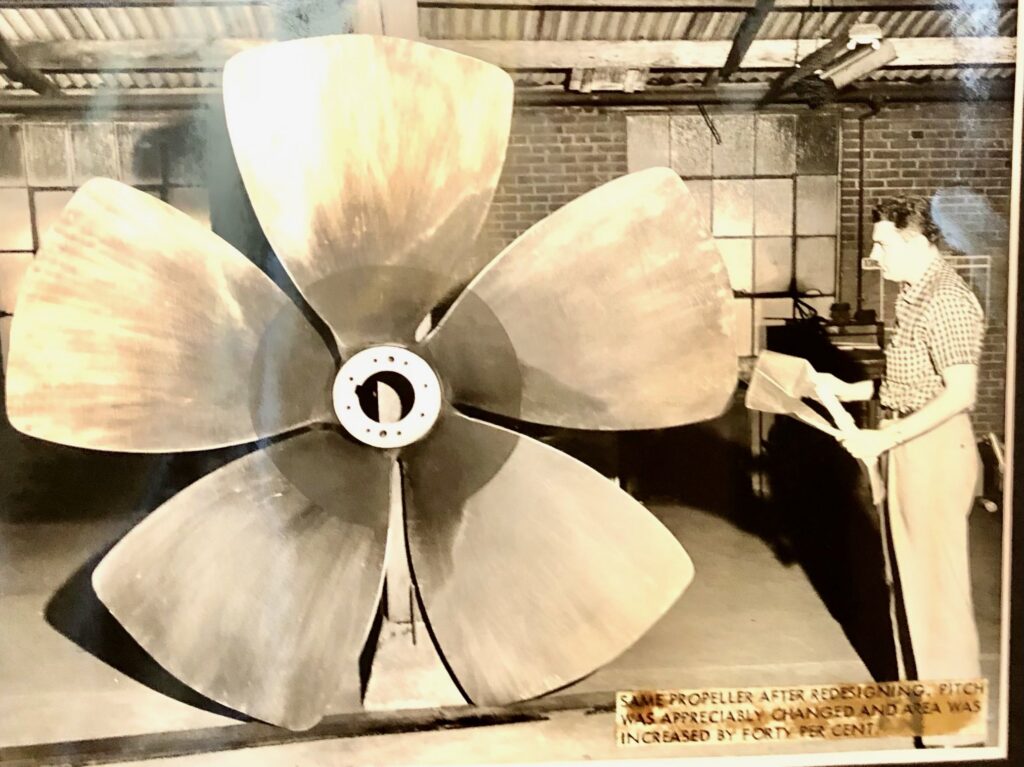
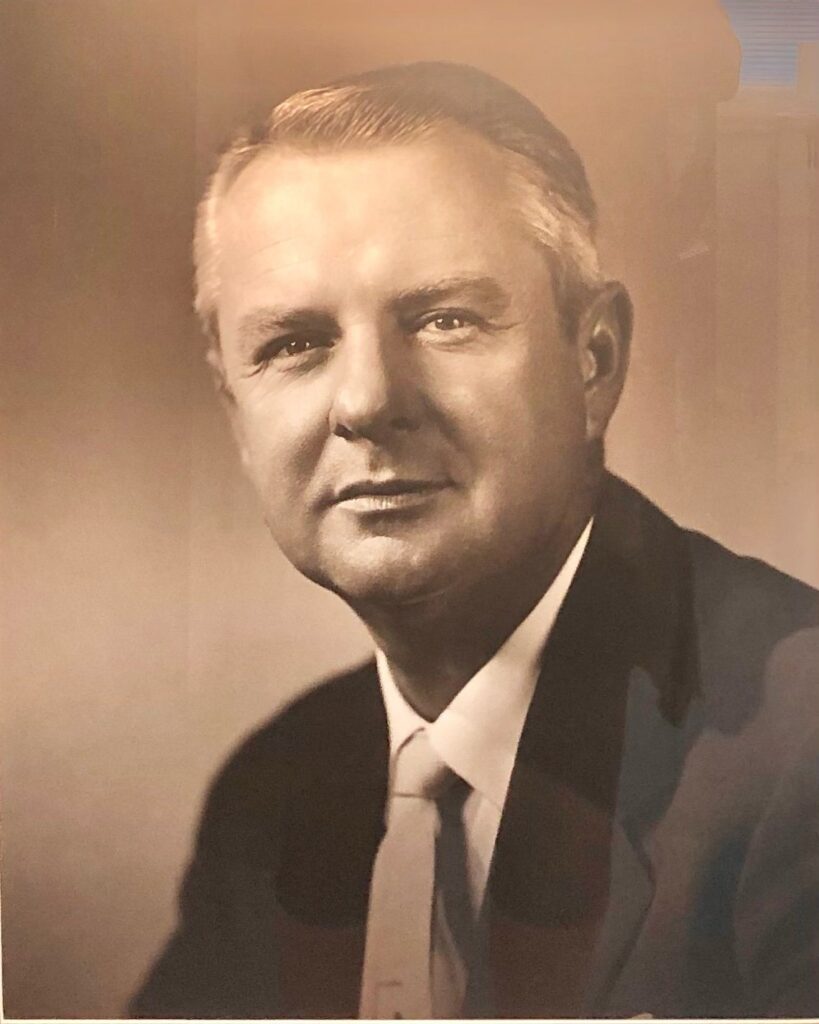
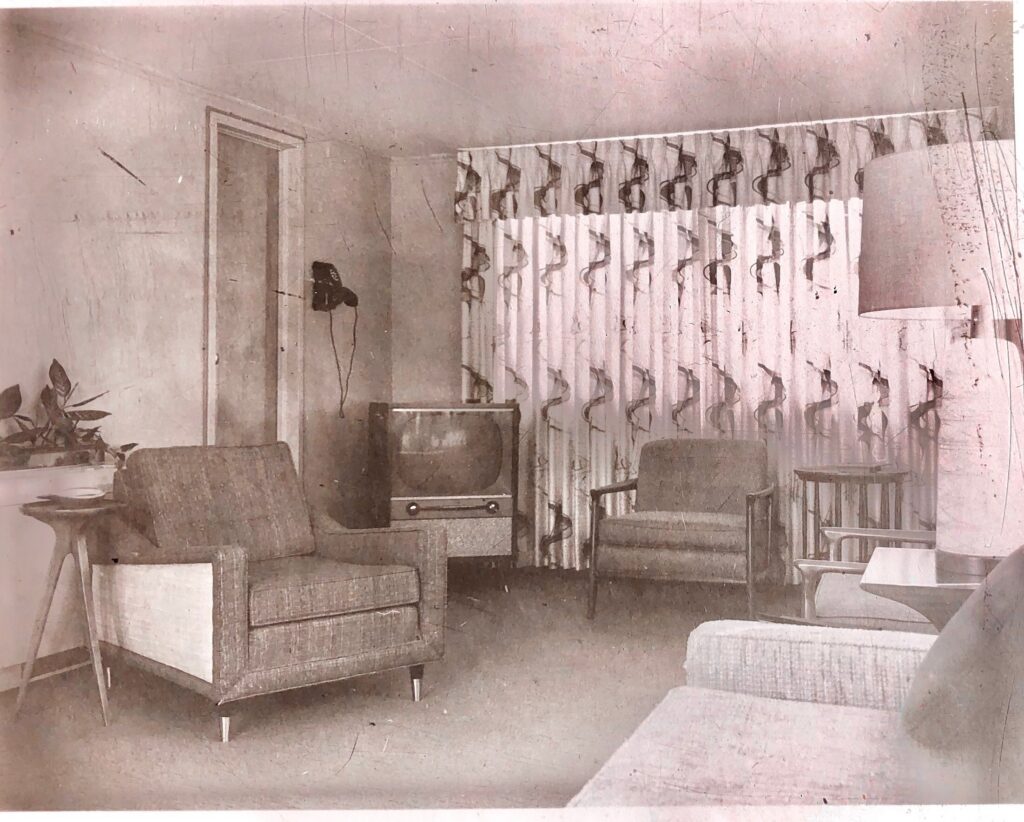
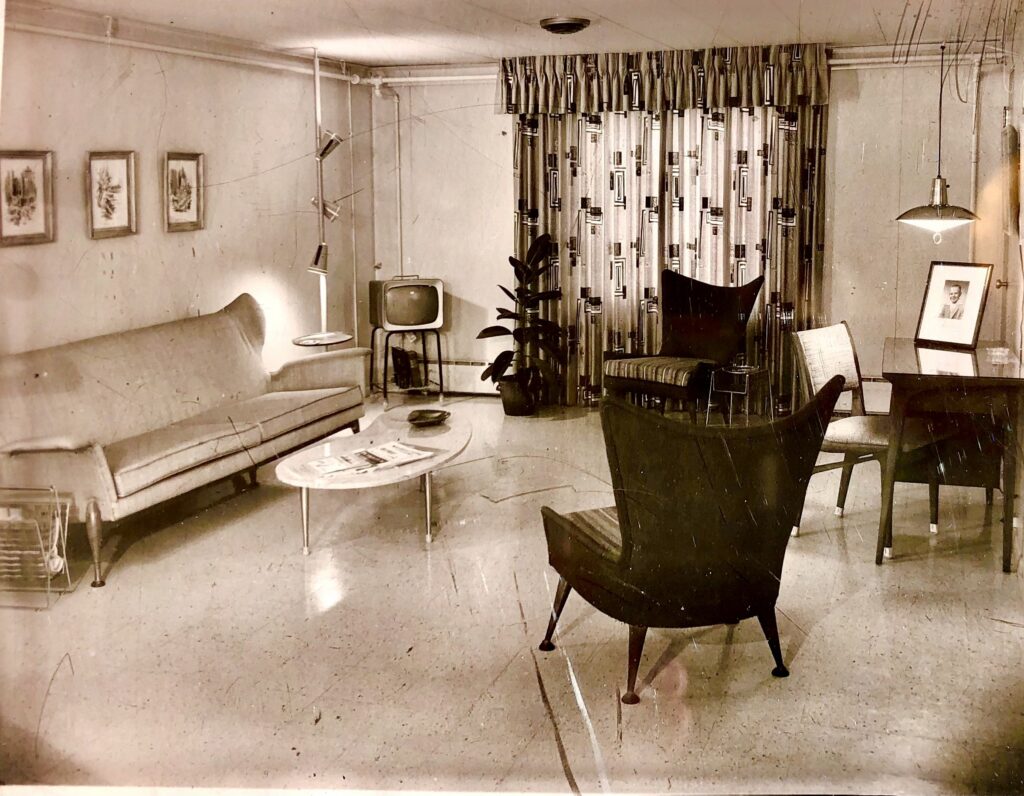
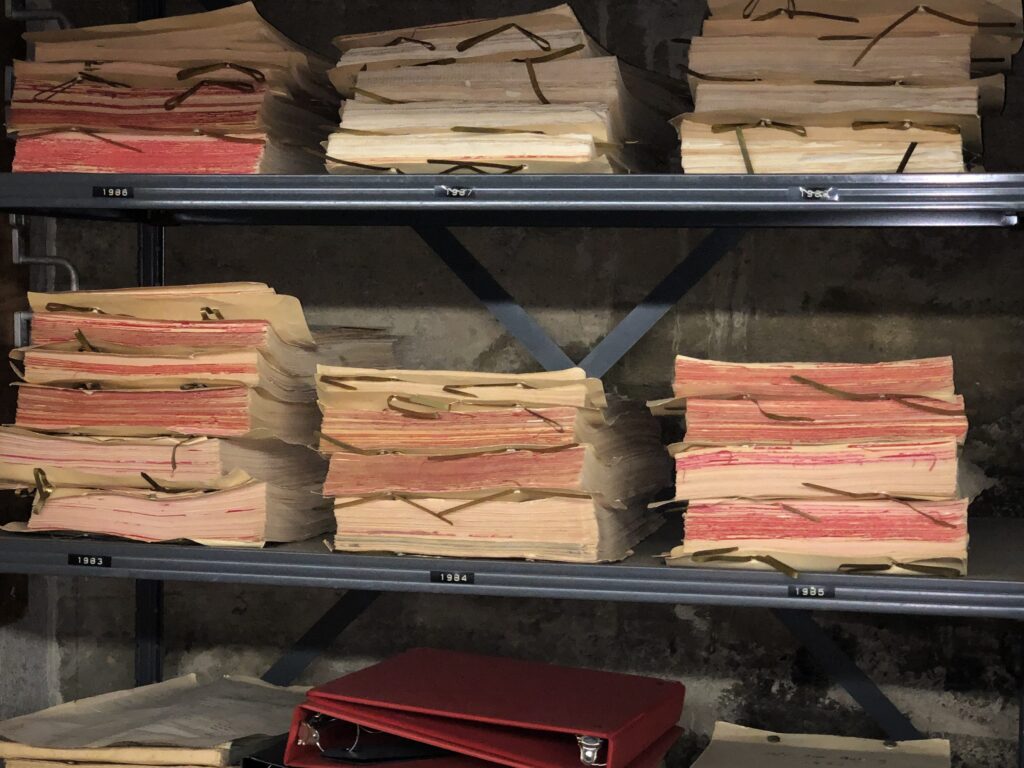
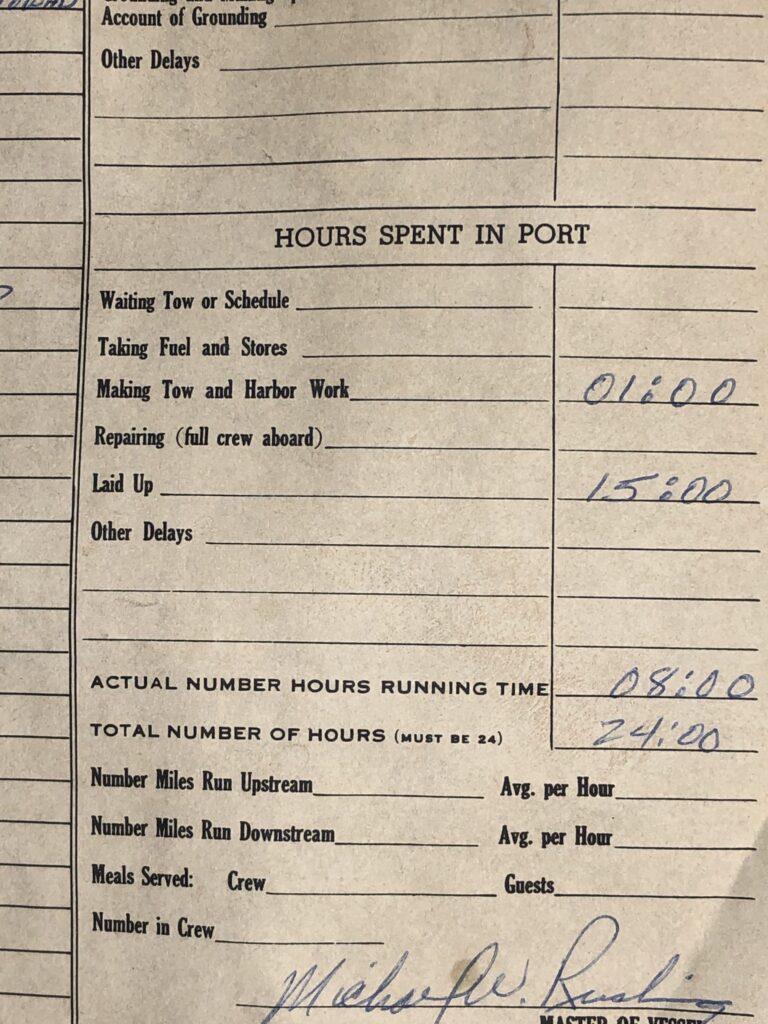
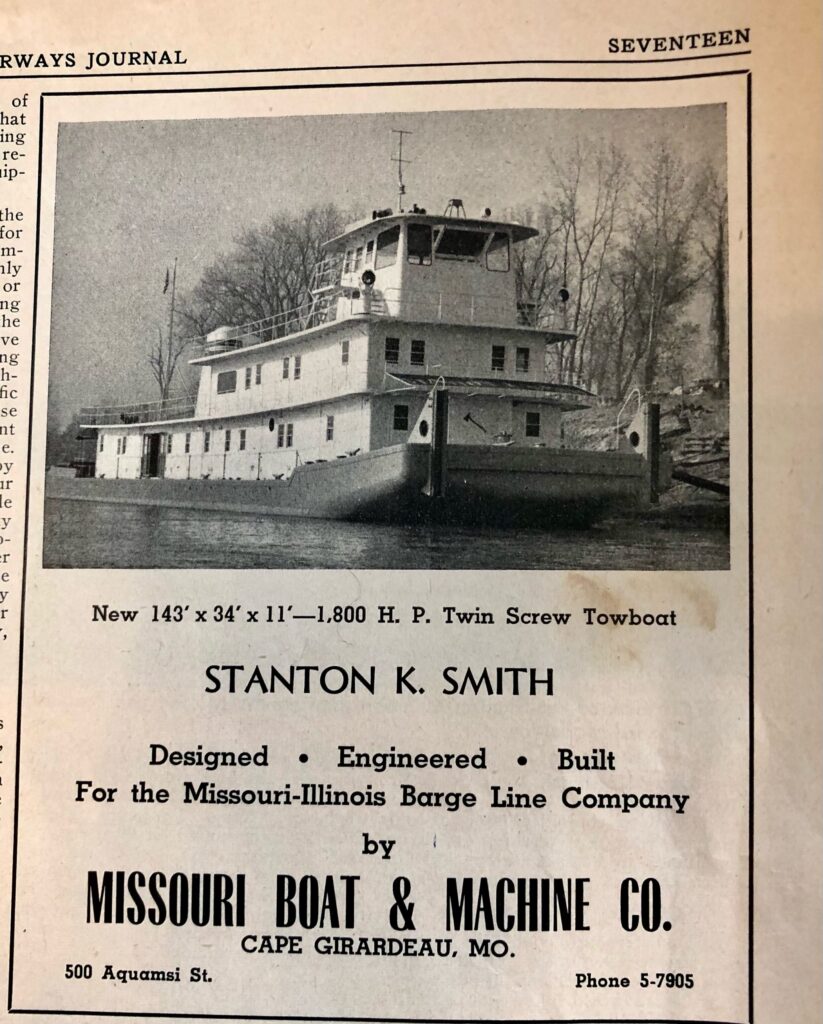
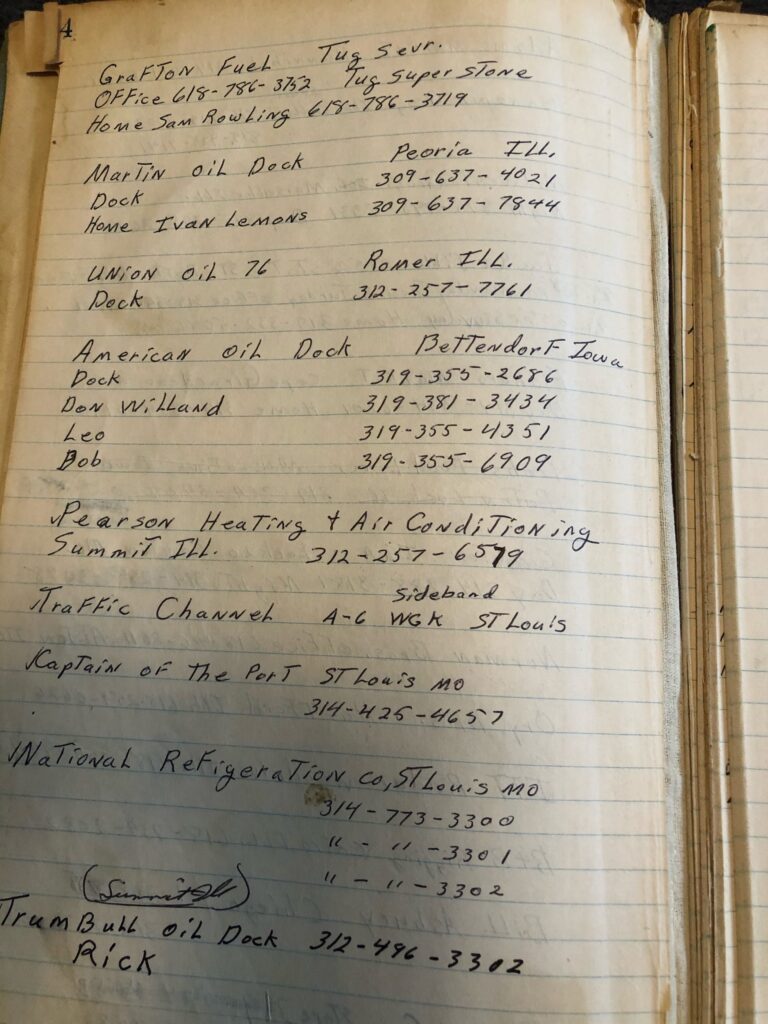
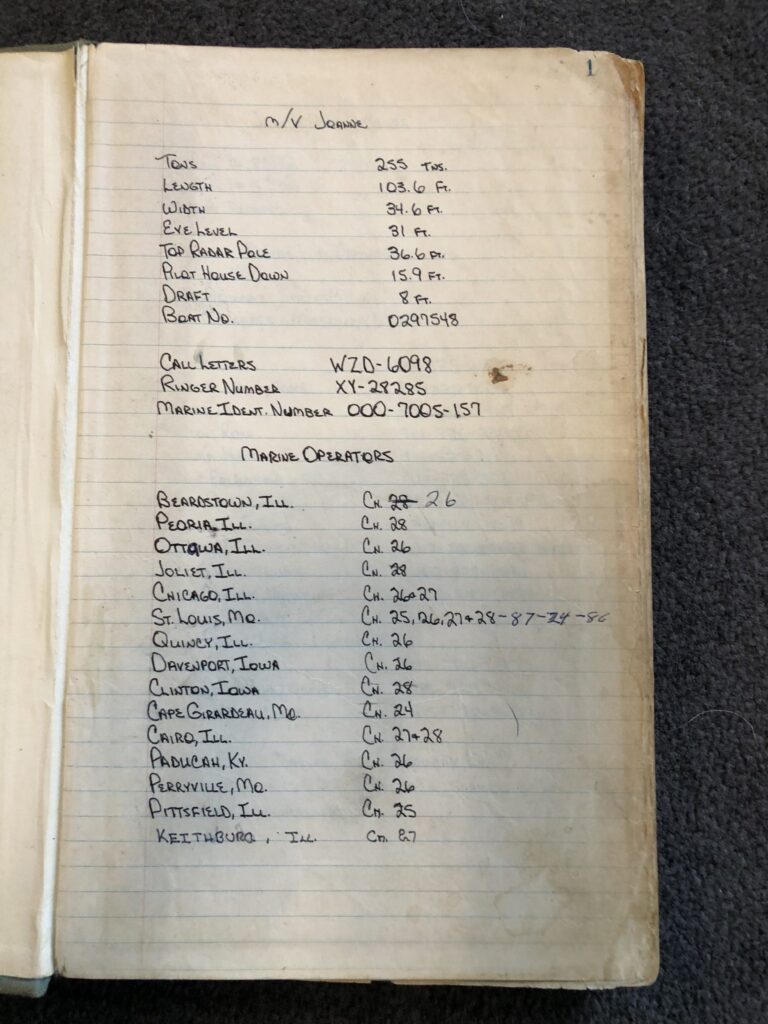
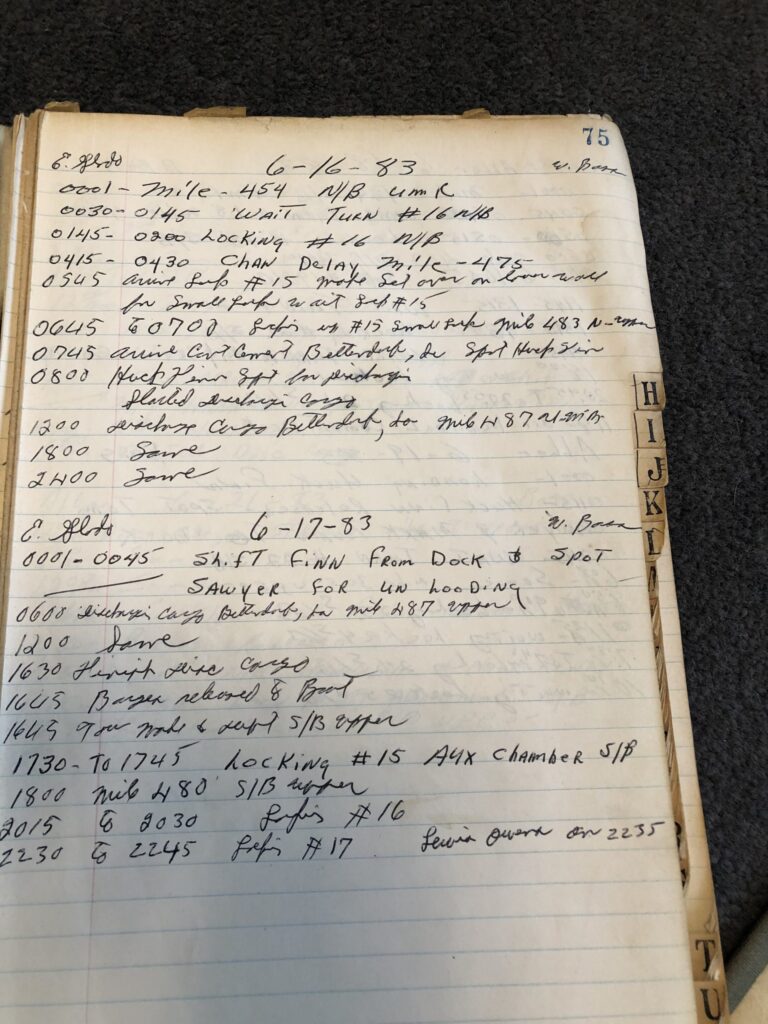
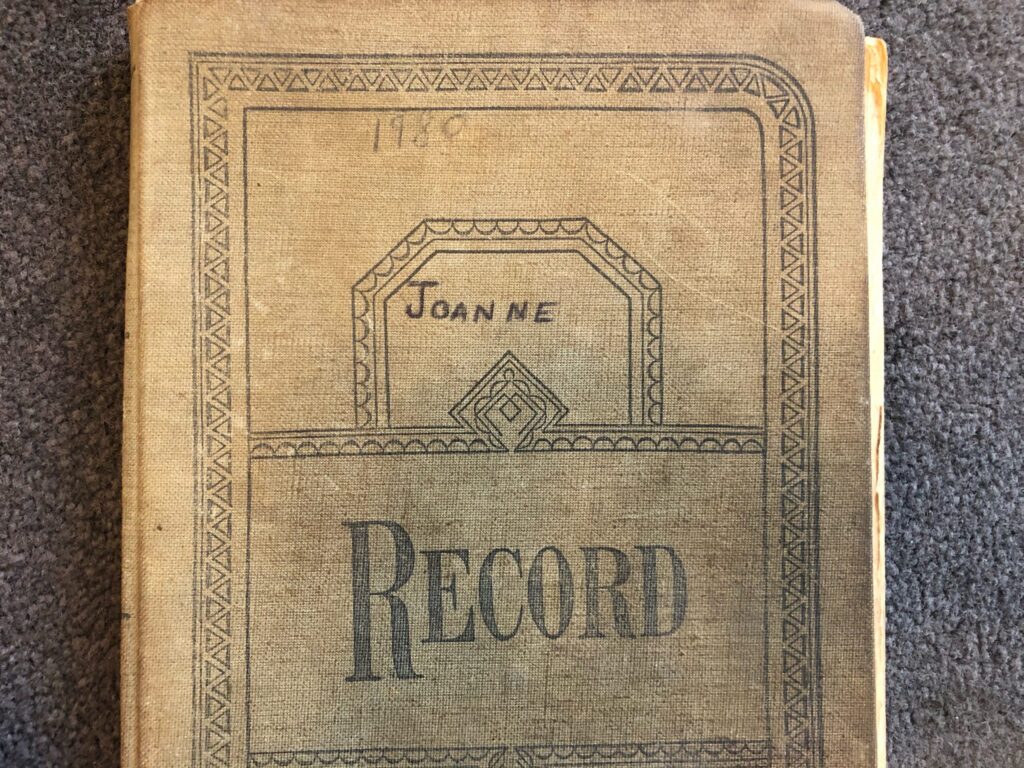
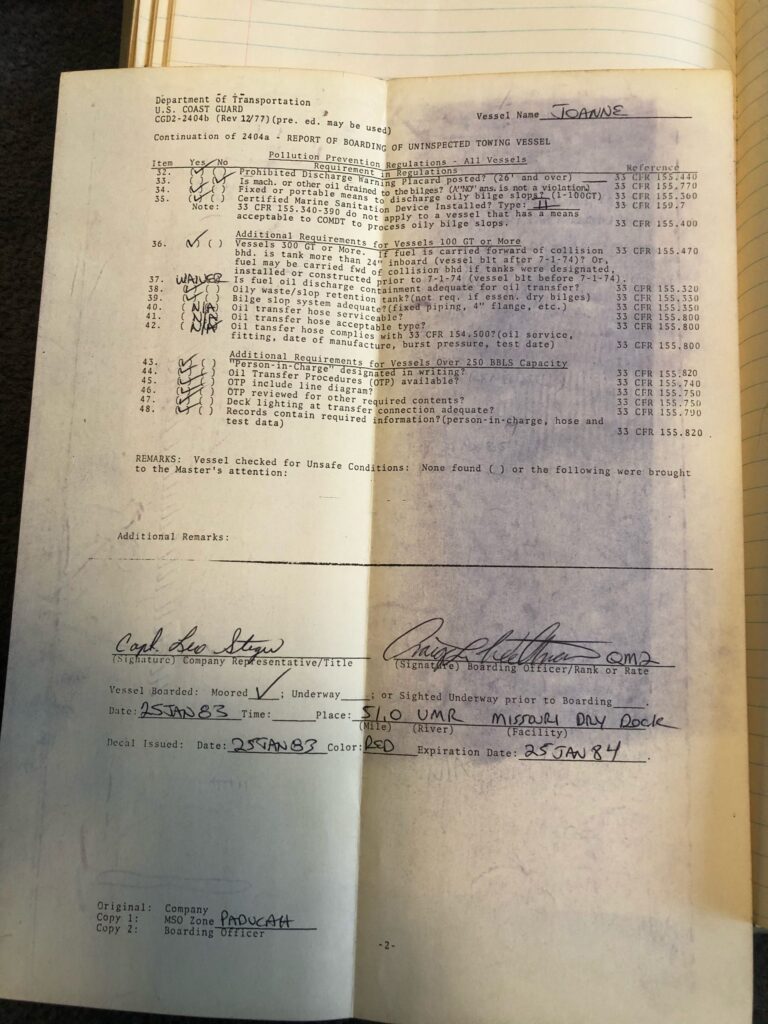
Explore photographs from the Erlbacher family and their river businesses, including generations of the family, historic towboats, barges, crews, shipyard operations and scenes of working life along the Mississippi River. Every photograph offers another view into a time when Cape Girardeau’s riverfront was not simply a place to watch the Mississippi pass by; it was a place where boats were built, repaired, crewed and sent back onto one of America’s great commercial waterways.



Help preserve this river history
Support the Erlbacher Collection
The Erlbacher Collection preserves more than the history of one family. It helps preserve the story of Cape Girardeau’s relationship with the Mississippi River and the generations of people who built their lives and livelihoods along it.
Your support helps the Kellerman Foundation preserve historic photographs, documents, artifacts and oral histories; care for the collection; develop educational exhibits; and make Southeast Missouri’s history accessible to future generations.
By supporting the Kellerman Foundation, you help ensure that stories like the Erlbachers’ are not lost, and that the people, businesses and ideas that shaped our region continue to be remembered.
Visit the Erlbacher Collection
Experience Cape Girardeau's River Story
Discover the Erlbacher Collection at Kellerman-Lorimier Hall, the home of the Kellerman Foundation for Historic Preservation.
Located in historic Cape Girardeau, just blocks from the Mississippi River, the collection provides visitors with an opportunity to explore the people and businesses that helped define Cape Girardeau as a river community.
From the earliest Erlbacher-built towboats to Missouri Barge Line and Missouri Dry Dock & Repair, the exhibit tells a distinctly Southeast Missouri story, one that ultimately reaches far beyond the region through the Mississippi River system.